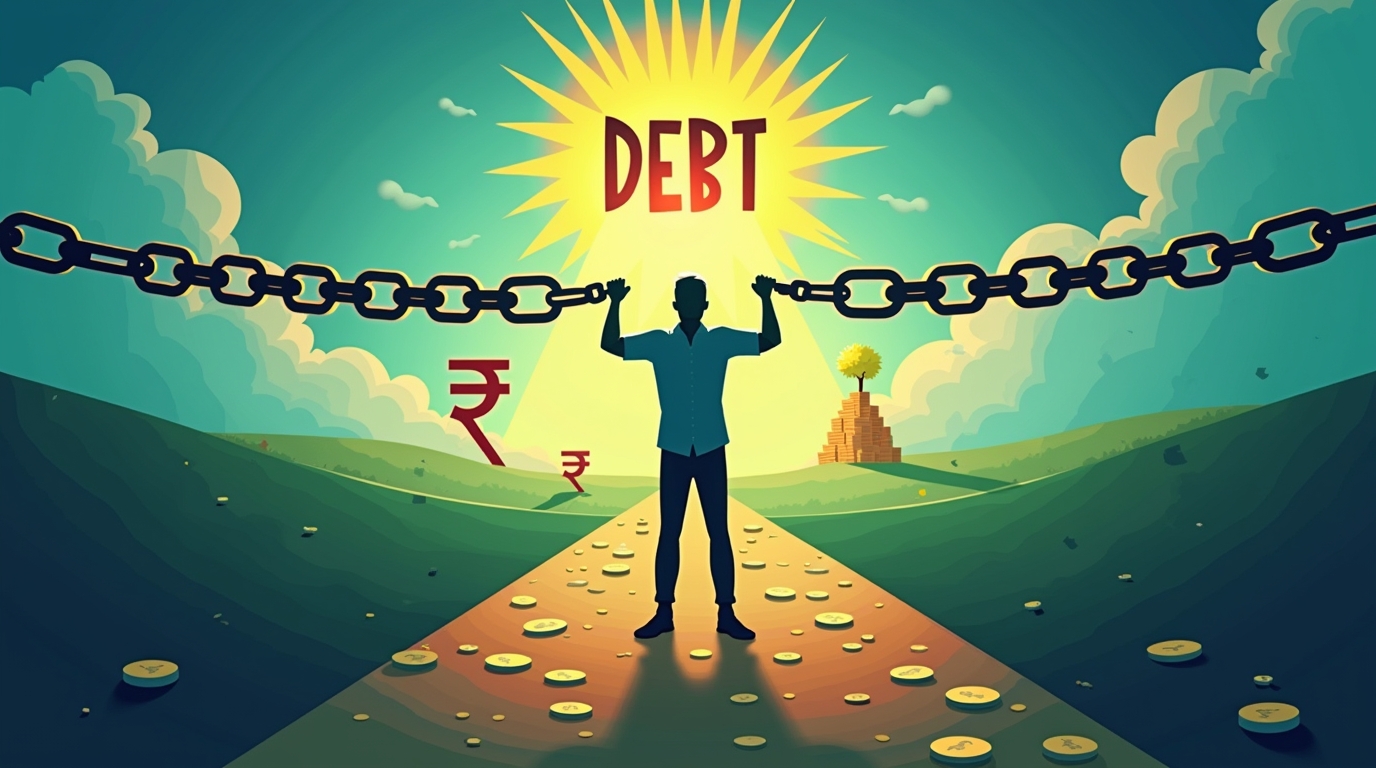
Managing debt effectively is essential in India, where personal loans and credit card debt have surged, with outstanding credit card loans reaching ₹2.6 lakh crore in 2025, according to RBI data. High interest rates (up to 48% p.a. on credit cards) can trap consumers in a cycle of payments, but strategies like the debt snowball and avalanche methods, combined with smart budgeting, can help you pay off debt quicker and save thousands in interest. This beginner-friendly guide, tailored for Indian consumers, explores these strategies with real-life scenarios and tools from toolsncalc.com. Whether dealing with loans from SBI, HDFC, or app-based lenders, you'll learn how to regain financial control and build a debt-free future.
Understanding Debt in India
Debt is borrowed money that must be repaid with interest, and in India, common types include credit cards, personal loans, home loans, and education loans. The RBI's Medium-Term Debt Management Strategy (MTDS) focuses on government debt, but for individuals, poor management can lead to high costs and low credit scores (via CIBIL). Start by listing your debts: total amount, interest rate, EMI, and minimum payment. Use toolsncalc.com’s debt calculator to assess your situation and project repayment timelines.
High-interest debt like credit cards (36%–48% p.a.) grows fast, while personal loans (10%–20%) are more manageable. Government initiatives like the Pradhan Mantri Jan Dhan Yojana promote financial inclusion, but personal strategies are key to avoiding debt traps.
The Debt Snowball Method: Build Motivation
The debt snowball method prioritizes paying off smallest debts first for quick psychological wins, ignoring interest rates initially. Popularized by Dave Ramsey, it's effective for motivation in India, where multiple small loans (e.g., from fintech apps) are common.
Steps
- List debts from smallest to largest.
- Pay minimum EMIs on all; direct extra funds to the smallest.
- Once cleared, roll that EMI to the next debt.
Real-Life Scenario: Amit, a software engineer in Mumbai, has ₹20,000 credit card debt (36% interest), ₹50,000 personal loan (15%), and ₹10,000 app loan (20%). Using snowball, he clears the ₹10,000 loan first in 3 months, then applies ₹3,000 monthly to the credit card, paying off all in 15 months—gaining confidence along the way.
This method suits those overwhelmed by multiple debts, as per BankBazaar guides.
The Debt Avalanche Method: Minimize Interest Costs
The debt avalanche method focuses on high-interest debts first to save on total interest, making it cost-effective for Indian consumers facing steep credit card rates.
Steps
- List debts from highest to lowest interest rate.
- Pay minimums on all; extra to the highest-rate debt.
- Roll payments to the next once paid off.
Real-Life Scenario: Priya, a teacher in Delhi, has ₹1 lakh credit card debt (40%), ₹2 lakh personal loan (12%), and ₹50,000 education loan (8%). Using avalanche, she targets the credit card, saving ₹12,000 in interest compared to snowball, clearing all in 20 months.
Ideal for analytical individuals, this aligns with RBI's emphasis on efficient debt management.
Snowball vs. Avalanche: Which is Right for You?
Here’s a comparison to help you choose:
| Method |
Focus |
Pros |
Cons |
Best For |
| Snowball |
Smallest debt first |
Quick motivation, psychological wins |
Higher total interest |
Those with many small debts |
| Avalanche |
Highest interest first |
Saves money on interest |
Slower progress on small debts |
Cost-focused planners |
Budgeting Tips for Effective Debt Management
Budgeting frees up money for faster repayment. Use the 50/30/20 rule: 50% on needs (rent, EMIs), 30% on wants, 20% on debt/savings.
- Track Expenses: Apps like Money View help monitor spending.
- Cut Unnecessary Costs: Cancel subscriptions, cook at home to save ₹5,000 monthly.
- Increase Income: Freelance via Upwork or sell on OLX for extra debt payments.
- Consolidate Debts: Transfer high-rate debts to lower-rate personal loans (e.g., 10% from Axis Bank).
- Seek Help: Use RBI's financial counseling or apps like Cred for bill payments.
Real-Life Scenario: Raj, burdened with ₹2 lakh debt, budgets ₹15,000 monthly surplus by reducing dining out. Using avalanche, he clears debt in 18 months, saving ₹8,000 in interest.
For more, check Budgeting Basics.
Conclusion
Debt management strategies like snowball and avalanche, paired with budgeting, empower Indian consumers to get out of debt faster. By prioritizing high-interest debts or building motivation, you can save on costs and improve your CIBIL score. Start planning with toolsncalc.com’s debt calculator and take control today.
References


















Comments
Please login to post a comment.