Learn how to calculate profit and loss in the stock market using simple formulas and examples in rupees. Understand stock returns, average buying price, brokerage, STT, GST, CAGR, intraday trading, and Indian capital gains tax.
Official inflation figures show how prices change across a broad basket of goods and services, but your household may experience inflation differently. Learn how to calculate your personal inflation rate in India using your actual expenses, compare it with CPI, and understand what it means for your salary, savings, and investments.
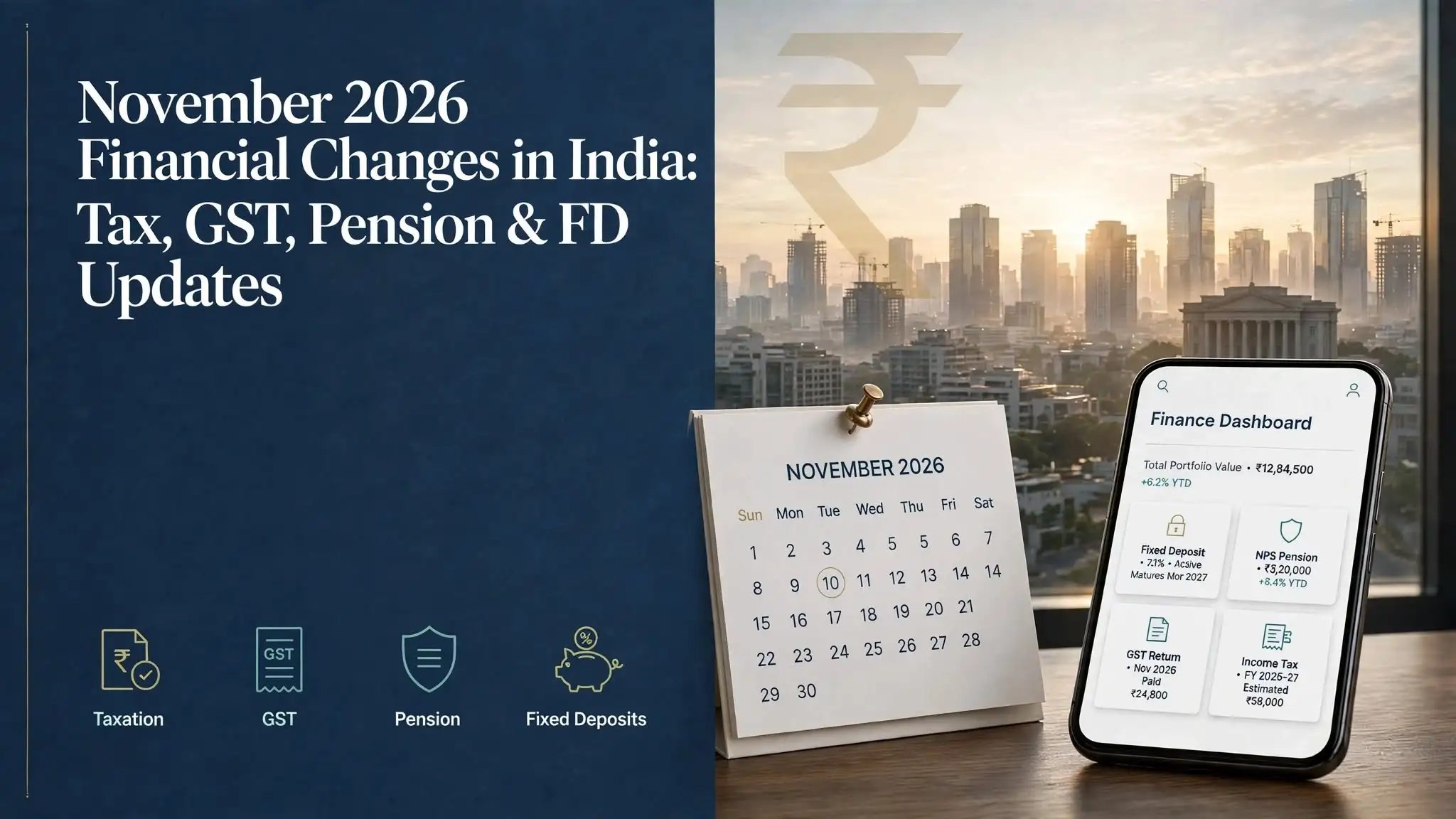
November 2026 brings important financial deadlines and regulatory updates for Indian taxpayers, pensioners, businesses and savers. Learn about the pension life certificate deadline, GST changes, income tax filing extensions, FD interest rates and banking updates—and understand which changes may affect you.
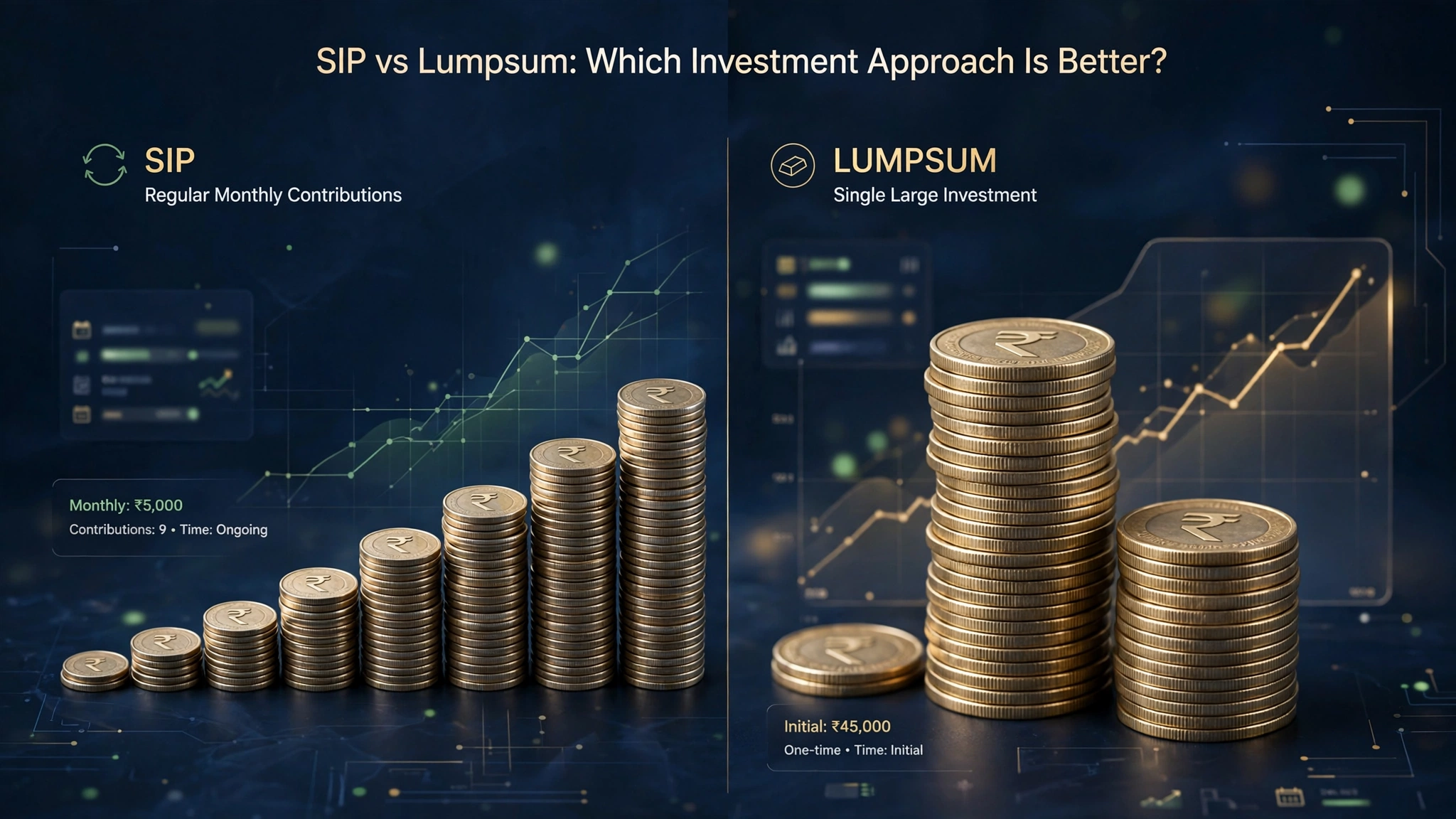
SIP and lumpsum investing are two ways to invest in mutual funds, but they suit different situations. Compare how they work, their risks, potential returns, rupee cost averaging, and when each approach may make sense for investors in India.
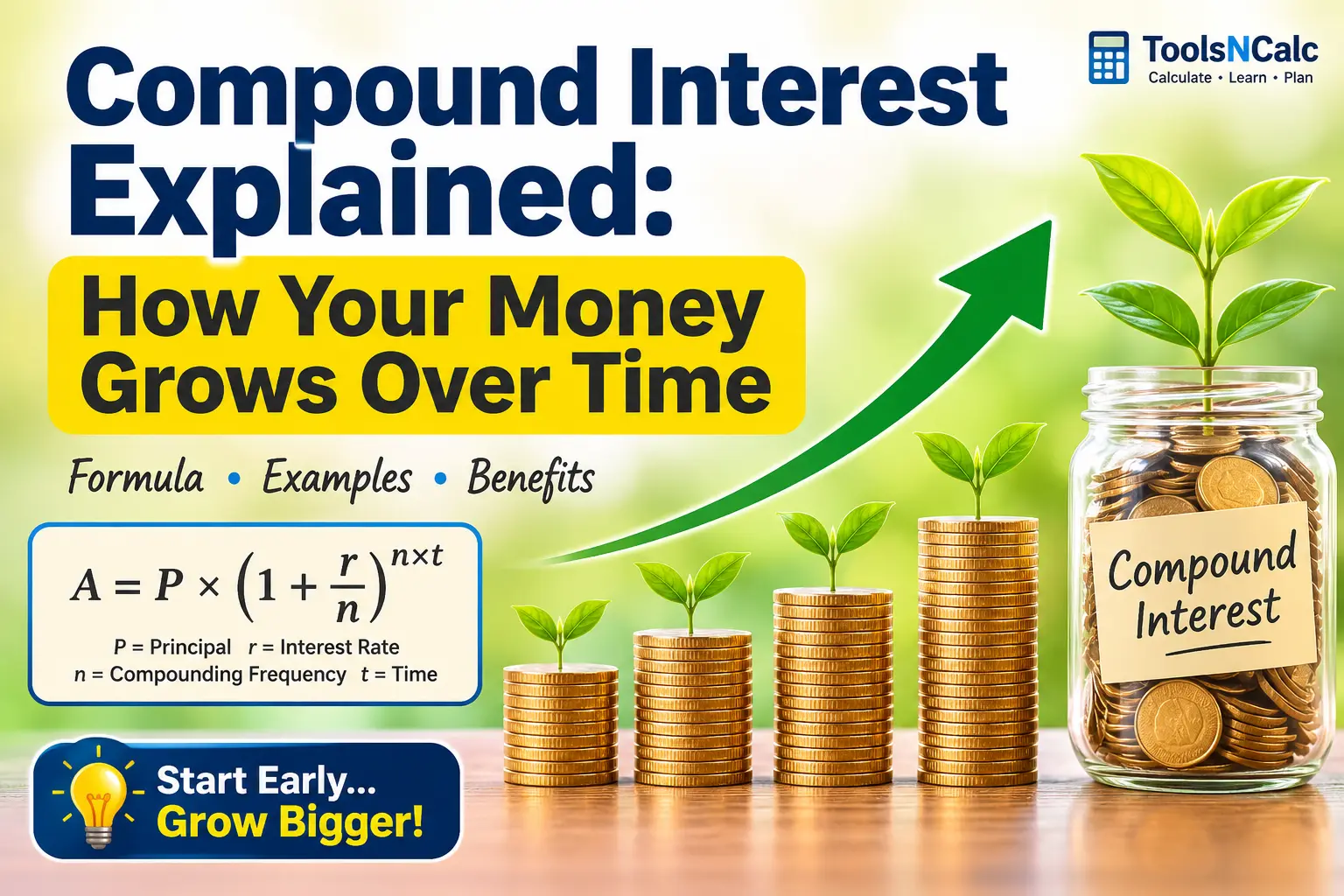
Discover how compound interest works and how it can help your money grow over time. Learn the compound interest formula, explore simple examples, understand the difference between compound and simple interest, and calculate potential savings growth using a compound interest calculator.
Guide to calculating potential stock returns using our investment tool: inputs like amount and rate, interpreting results for 2025. Beginner tips, scenarios, and charts to plan investments at toolsncalc.com.
Learn stocks for beginners in India: what stocks are, shares, dividends, risks, and how to buy. Simple explanations, real scenarios, and calculators to start investing in 2025 at toolsncalc.com.
Discover budgeting basics for beginners in India: step-by-step guide with 50/30/20 rule, tips, mistakes to avoid, and real examples to manage your money in 2025. Use toolsncalc.com calculators for effective financial planning.
Discover effective debt management strategies in India: snowball vs. avalanche methods, budgeting tips to pay off debt faster in 2025. Real scenarios, charts, and calculators for financial freedom at toolsncalc.com.
Discover credit cards in India: benefits like rewards, risks such as debt, and smart usage tips for beginners in 2025. Real scenarios and calculators to use credit wisely at toolsncalc.com.
India’s 2025 GST overhaul simplifies tax slabs to 5%, 18%, and 40%, effective September 22, 2025. Discover the extensive list of products and services that have become cheaper or costlier, impacting households, businesses, and the economy.
In 2025, India's GST undergoes a major revamp with slabs simplified to 5%, 18%, and 40%, making essentials cheaper from September 22. Explore rate changes, impacts, and tools in this guide.
Learn how to maximize savings with compound interest in India using the formula A = P(1 + r/n)^(nt). Discover early saving benefits, real examples, and a calculator guide for 2025 at toolsncalc.com.
Uncover interest rates in India: simple vs. compound explained, their impact on savings and loans, with tips for 2025. Use toolsncalc.com calculators to optimize your finances.
Discover the essentials of savings accounts in India for 2025, including types, interest rates, and tips to choose the best one for your needs. Learn how to grow your savings effectively with expert insights and tools from toolsncalc.com.
<p>Managing your money effectively starts with choosing the right bank account. Whether you’re a student saving pocket money, a professional managing daily expenses, or a business owner handling frequ
<p><b>London, July 7, 2025</b> – Hollywood’s newest power couple, Andrew Garfield and Monica Barbaro, made waves at Wimbledon’s seventh day on July 6, 2025, confirming their romance with a chic, coord
<p><b>Silverstone, UK – July 6, 2025</b> – Nico Hulkenberg achieved a historic milestone at the 2025 British Grand Prix, securing his first-ever Formula 1 podium after 239 race starts. The 37-year-old
<p>At ToolsnCalc.com, we take pride in providing accurate financial calculations. This article explains the mathematical formulas powering our most popular financial tools.</p>
<h3>Compound Interest
Latest GST Rules and Slabs in India: Key Updates for 2025
September 5, 2025 |
News |
By ToolsnCalc Team
The Goods and Services Tax (GST) in India has undergone a major overhaul in 2025, marking a significant step towards simplifying the tax regime and boosting economic growth. Announced during the 56th GST Council meeting on September 3, 2025, these changes aim to reduce the tax burden on essential goods, streamline compliance, and encourage consumption ahead of festive seasons like Navratri and Diwali. The revisions, effective from September 22, 2025 (except for certain tobacco products), shift from the previous multi-tier structure to a more straightforward system. This article breaks down the new slabs, specific rate changes, impacts, and resources for further reading.
Overview of GST Slab Changes in 2025
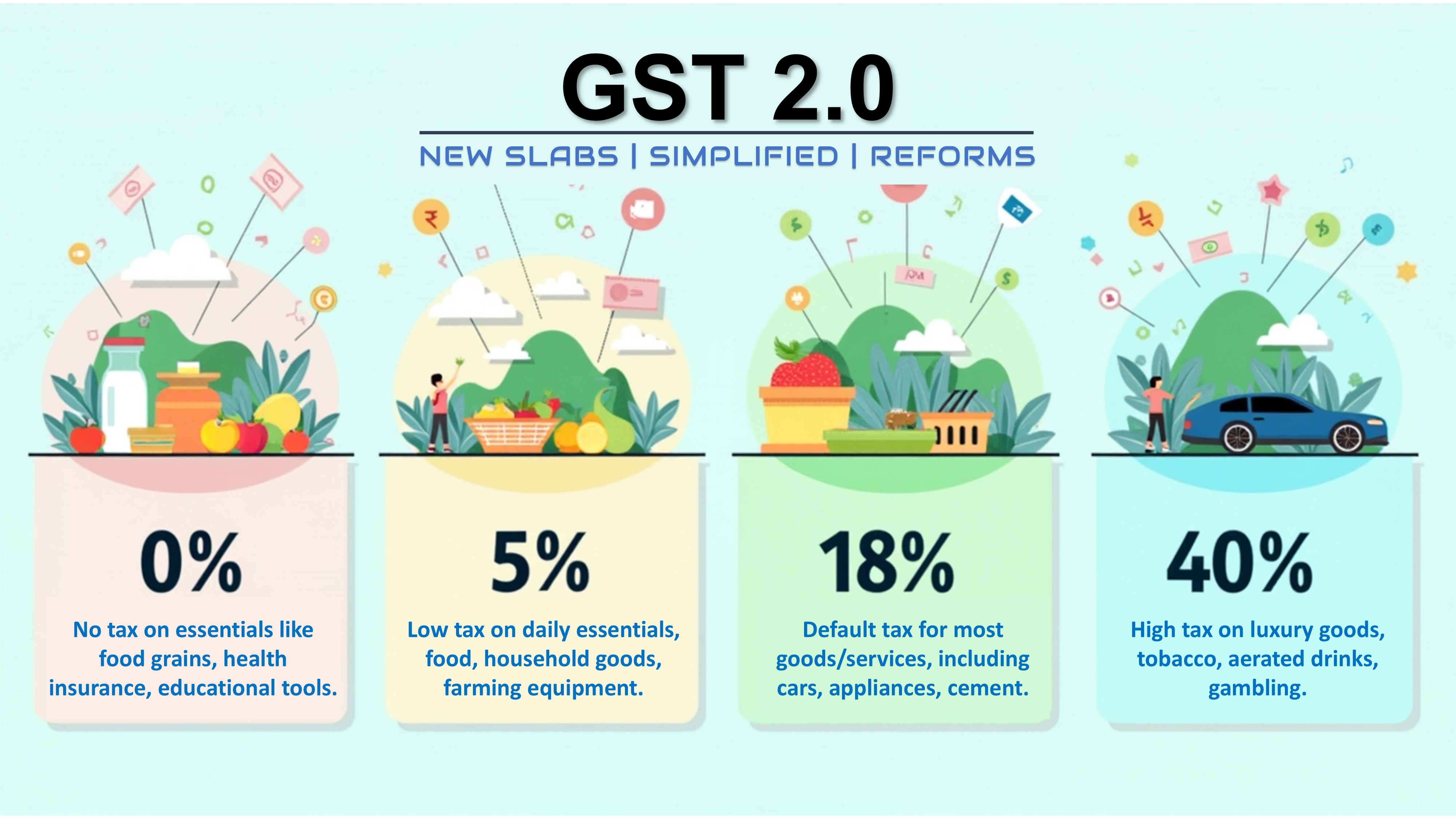
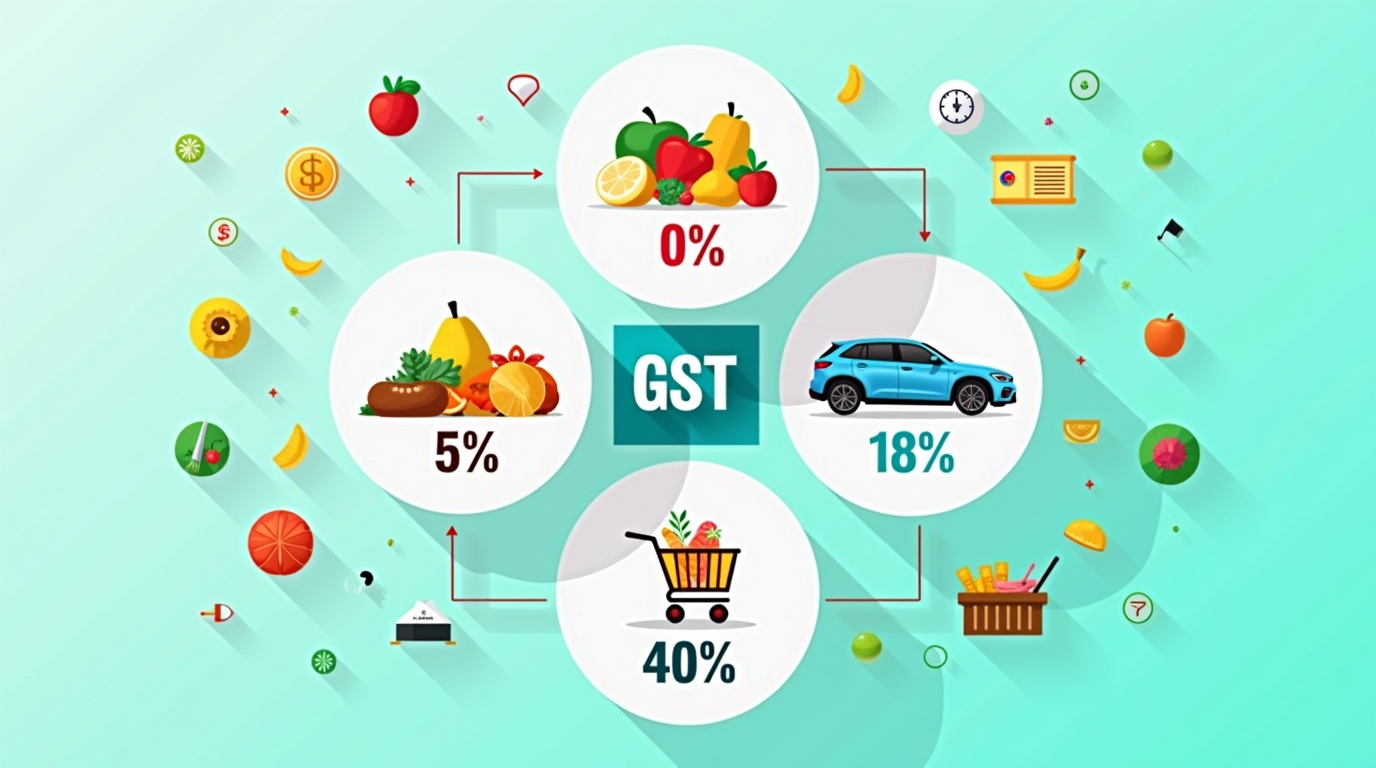
India's GST system, introduced in 2017, originally featured four main slabs: 5%, 12%, 18%, and 28%, along with a 0% exemption for essentials and additional cess on luxury items. The 2025 reforms rationalize this into three primary rates:
0% (Exempt/Nil): For basic necessities like unpacked food grains, fresh produce, and now extended to items like health insurance and certain educational tools.
5% (Merit Rate): Applies to everyday essentials, expanded to include many food items, household goods, and agricultural equipment previously taxed higher.
18% (Standard Rate): The default for most goods and services, absorbing items from the old 12% and 28% slabs.
40% (De-merit Rate): A new slab for sin goods (e.g., tobacco, bidis) and luxury items (e.g., high-end cars, yachts), replacing the 28% + cess structure.
These changes are expected to make over 400 items cheaper, particularly daily-use products, while increasing taxes on discretionary spending to generate revenue for the government.
Detailed Rate Changes: What's Cheaper and Costlier?
The GST Council has reclassified hundreds of items. Below are key categories with old vs. new rates, presented in tables for clarity. Data is compiled from official announcements and reliable sources.
Food and Agro Products
Many staples have seen reductions to ease household budgets.
Item
Old Rate
New Rate
Ultra-High Temperature (UHT) milk
5%
0%
Butter, ghee, cheese
12%
5%
Condensed milk
12%
5%
Pre-packed snacks (e.g., mixtures, bhujiya)
12%
5%
Pasta, noodles, biscuits, cakes
12-18%
5%
Jams, jellies, sauces
12%
5%
Dried fruits and nuts (e.g., almonds, dates)
12%
5%
Sugar confectionery, chocolates
12-18%
5%
Pizza bread, khakhra, roti
5%
0%
Paratha, parotta
18%
0%
Cheaper Items: Most food products, benefiting middle-class families and reducing inflation on groceries.
Costlier Items: None significant in this category; focus is on relief.
Daily Essentials and Household Goods
Reductions here target common consumer items.
Item
Old Rate
New Rate
Hair oil, shampoo, toothpaste, soap
18%
5%
Utensils
12%
5%
Feeding bottles, baby napkins
12%
5%
Erasers, pencil sharpeners
5-12%
0%
Cheaper Items: Personal care and baby products, making them more affordable.
Healthcare and Education
Major relief for vulnerable sectors.
Item
Old Rate
New Rate
Health and life insurance (individual)
18%
0%
Medical oxygen, diagnostic kits
12%
5%
Glucometers, test strips
12%
5%
Exercise books, maps, globes
12%
0%
Certain life-saving drugs (e.g., Onasemnogene)
12%
0%
Cheaper Items: Insurance premiums and educational supplies, promoting accessibility.
Costlier Items: Sin goods, aligning with public health goals.
Other Notable GST Rule Updates
Refund Mechanism: 90% provisional refunds for inverted duty structures to improve cash flow for businesses.
Compliance Simplification: Monitoring of price changes for 400 items to prevent profiteering; potential anti-profiteering measures.
Exemptions Expanded: Defense equipment, works of art, and certain imports now at 0%.
No changes yet for fuel, restaurants, or mobile bills, despite expectations.
These reforms are projected to lower inflation, increase disposable income, and formalize the economy further.
Impact on Consumers and Businesses
For consumers, the shift means lower prices on essentials, potentially saving households 5-10% on monthly expenses. Businesses benefit from reduced classification disputes and faster refunds, though luxury sectors may face demand dips. Overall, the changes are a "Diwali gift" to spur spending.
Useful Resources and Tools
GST Calculators: Quickly compute taxes with these free tools:



















Comments
Please login to post a comment.