Learn how to calculate profit and loss in the stock market using simple formulas and examples in rupees. Understand stock returns, average buying price, brokerage, STT, GST, CAGR, intraday trading, and Indian capital gains tax.
Official inflation figures show how prices change across a broad basket of goods and services, but your household may experience inflation differently. Learn how to calculate your personal inflation rate in India using your actual expenses, compare it with CPI, and understand what it means for your salary, savings, and investments.
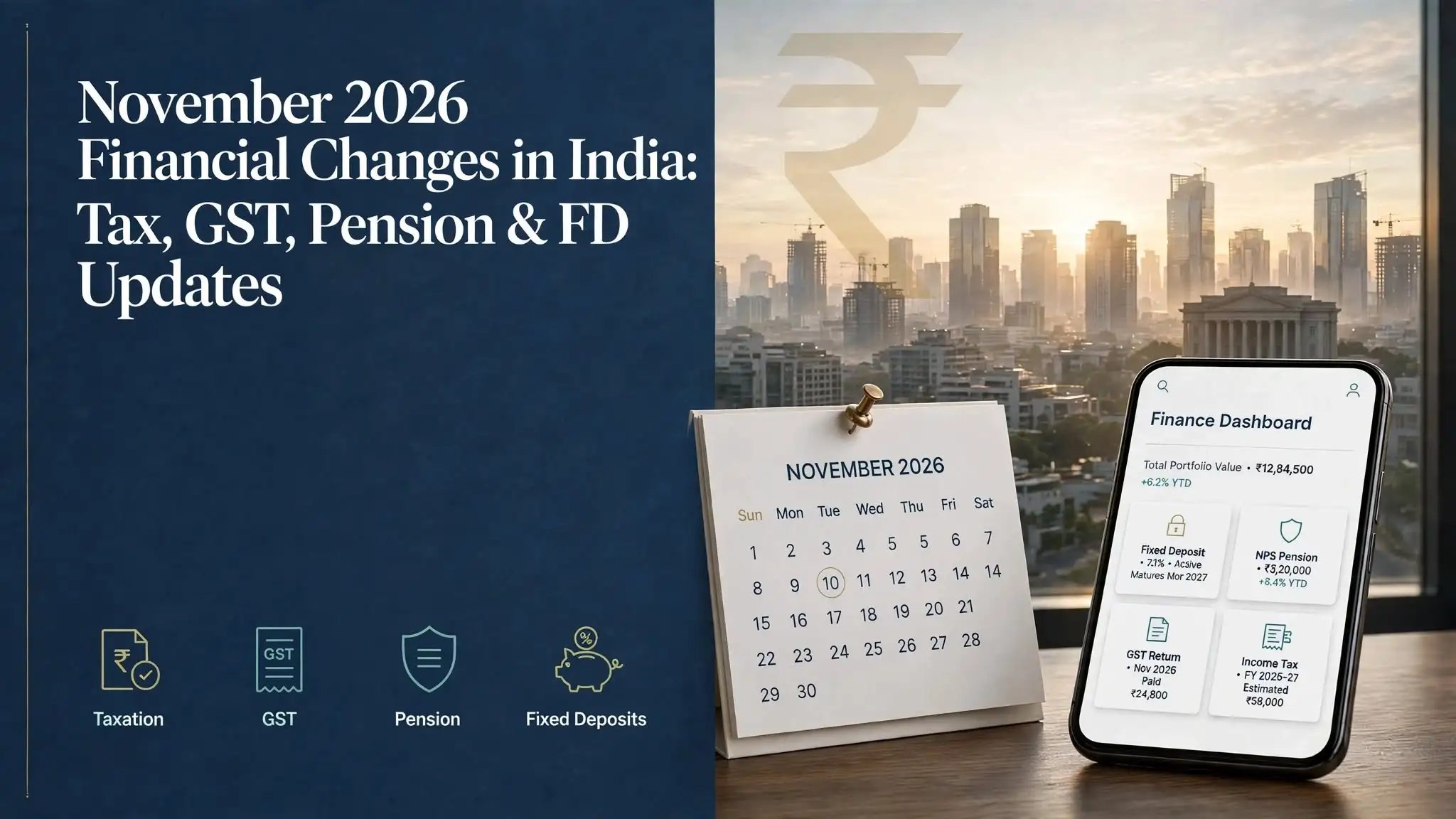
November 2026 brings important financial deadlines and regulatory updates for Indian taxpayers, pensioners, businesses and savers. Learn about the pension life certificate deadline, GST changes, income tax filing extensions, FD interest rates and banking updates—and understand which changes may affect you.
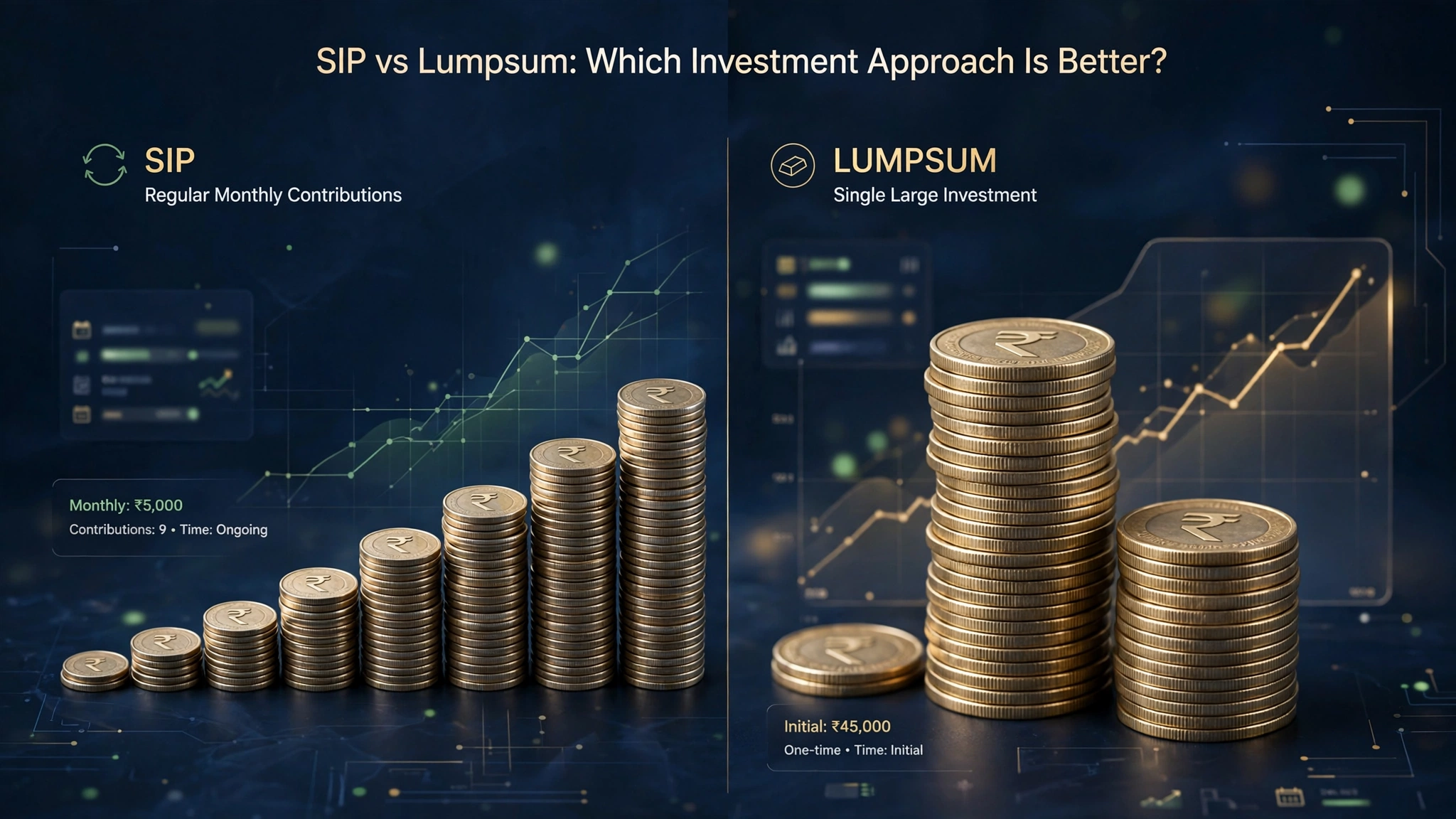
SIP and lumpsum investing are two ways to invest in mutual funds, but they suit different situations. Compare how they work, their risks, potential returns, rupee cost averaging, and when each approach may make sense for investors in India.
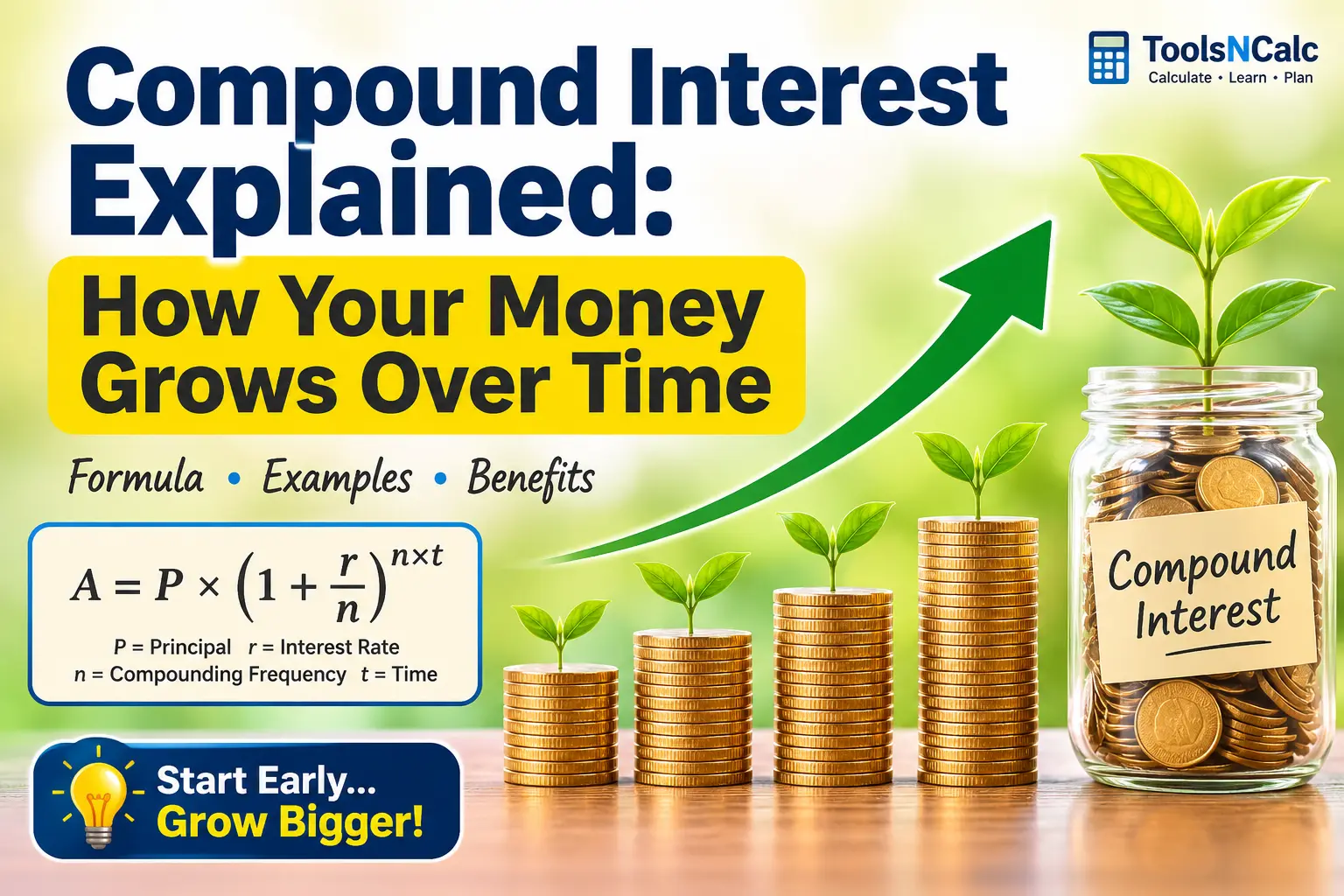
Discover how compound interest works and how it can help your money grow over time. Learn the compound interest formula, explore simple examples, understand the difference between compound and simple interest, and calculate potential savings growth using a compound interest calculator.
Guide to calculating potential stock returns using our investment tool: inputs like amount and rate, interpreting results for 2025. Beginner tips, scenarios, and charts to plan investments at toolsncalc.com.
Learn stocks for beginners in India: what stocks are, shares, dividends, risks, and how to buy. Simple explanations, real scenarios, and calculators to start investing in 2025 at toolsncalc.com.
Discover budgeting basics for beginners in India: step-by-step guide with 50/30/20 rule, tips, mistakes to avoid, and real examples to manage your money in 2025. Use toolsncalc.com calculators for effective financial planning.
Discover effective debt management strategies in India: snowball vs. avalanche methods, budgeting tips to pay off debt faster in 2025. Real scenarios, charts, and calculators for financial freedom at toolsncalc.com.
Discover credit cards in India: benefits like rewards, risks such as debt, and smart usage tips for beginners in 2025. Real scenarios and calculators to use credit wisely at toolsncalc.com.
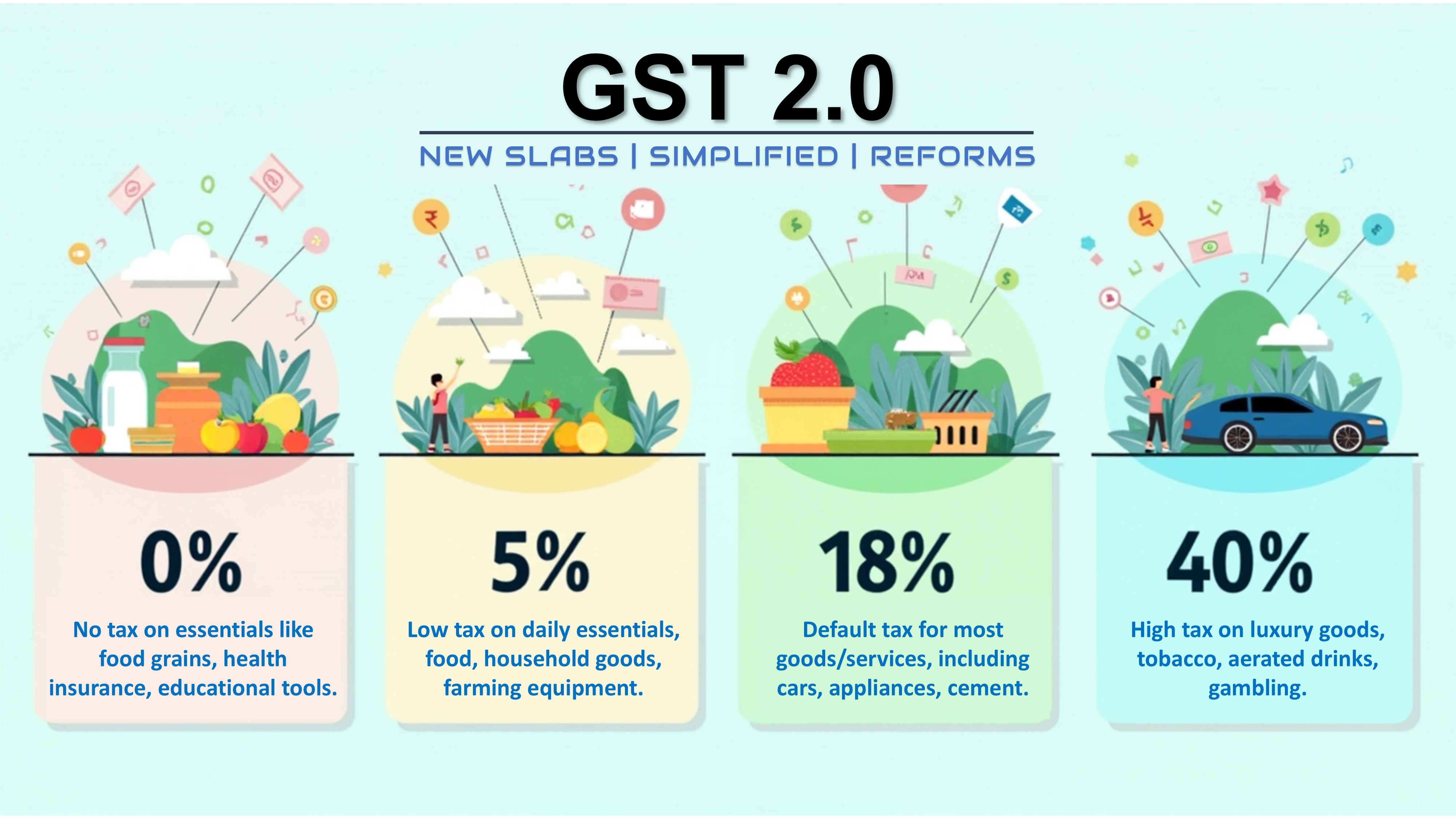
India’s 2025 GST overhaul simplifies tax slabs to 5%, 18%, and 40%, effective September 22, 2025. Discover the extensive list of products and services that have become cheaper or costlier, impacting households, businesses, and the economy.
In 2025, India's GST undergoes a major revamp with slabs simplified to 5%, 18%, and 40%, making essentials cheaper from September 22. Explore rate changes, impacts, and tools in this guide.
Learn how to maximize savings with compound interest in India using the formula A = P(1 + r/n)^(nt). Discover early saving benefits, real examples, and a calculator guide for 2025 at toolsncalc.com.
Uncover interest rates in India: simple vs. compound explained, their impact on savings and loans, with tips for 2025. Use toolsncalc.com calculators to optimize your finances.
Discover the essentials of savings accounts in India for 2025, including types, interest rates, and tips to choose the best one for your needs. Learn how to grow your savings effectively with expert insights and tools from toolsncalc.com.
<p>Managing your money effectively starts with choosing the right bank account. Whether you’re a student saving pocket money, a professional managing daily expenses, or a business owner handling frequ
<p><b>London, July 7, 2025</b> – Hollywood’s newest power couple, Andrew Garfield and Monica Barbaro, made waves at Wimbledon’s seventh day on July 6, 2025, confirming their romance with a chic, coord
<p><b>Silverstone, UK – July 6, 2025</b> – Nico Hulkenberg achieved a historic milestone at the 2025 British Grand Prix, securing his first-ever Formula 1 podium after 239 race starts. The 37-year-old
<p>At ToolsnCalc.com, we take pride in providing accurate financial calculations. This article explains the mathematical formulas powering our most popular financial tools.</p>
<h3>Compound Interest
GST 2.0 India 2025: Extensive List of Cheaper and Costlier Products and Services
September 7, 2025 |
News |
By ToolsnCalc Team
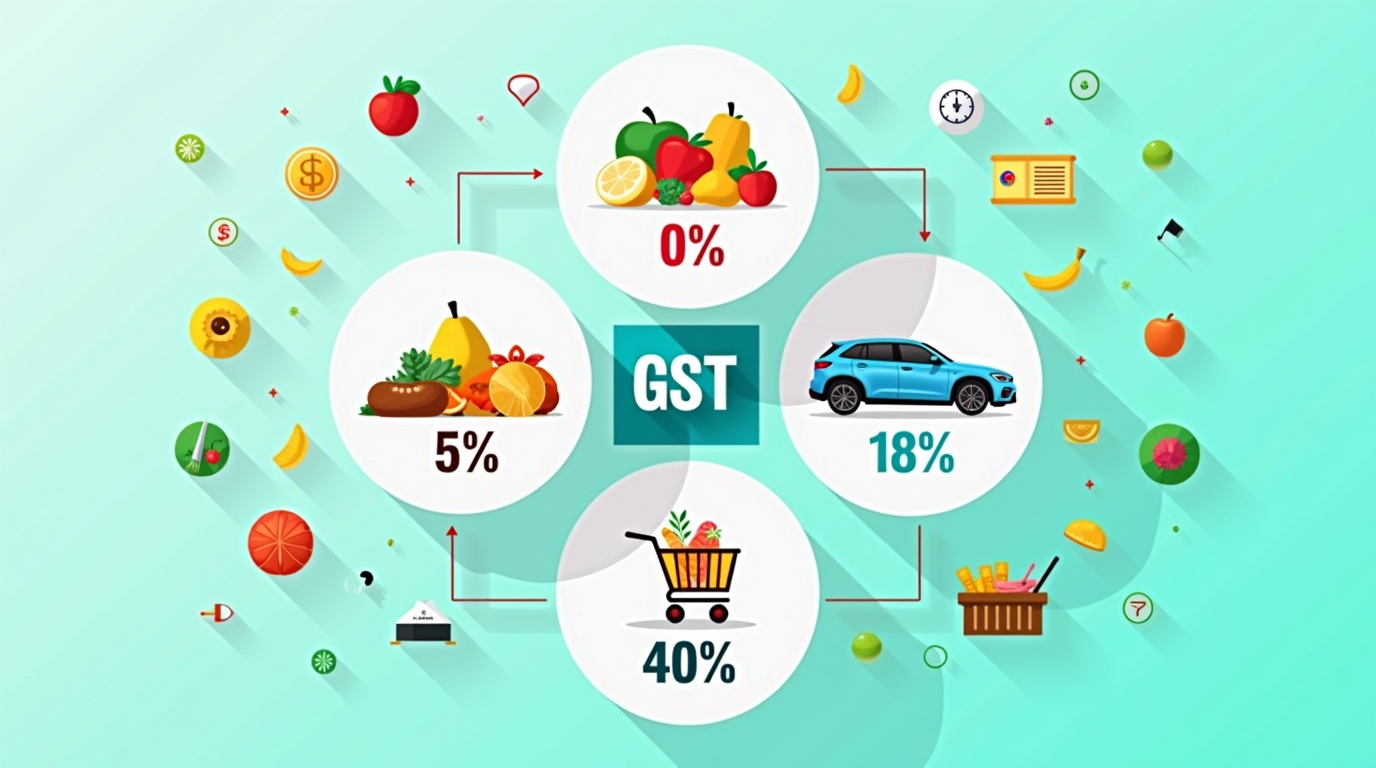
In a landmark reform, the 56th GST Council meeting on September 3, 2025, announced a major restructuring of India’s Goods and Services Tax (GST) system, dubbed GST 2.0. Effective from September 22, 2025, the new tax structure reduces the previous four slabs (5%, 12%, 18%, 28%) to two primary rates—5% and 18%—with a new 40% slab for luxury and sin goods. This overhaul aims to lower costs for essentials, boost consumption, and simplify compliance, while increasing taxes on demerit goods. Below is an extensive list of products and services affected, categorized by what’s cheaper and costlier, based on official announcements and reliable sources.
Cheaper Products and Services Under GST 2.0
The new GST structure significantly reduces taxes on daily essentials, healthcare, education, agriculture, and mass-market vehicles, making them more affordable. Most items previously taxed at 12% and 28% have shifted to 5% or 18%, with some now exempt (0%).
Food and Agro Products
Item
Old Rate
New Rate
Ultra-High Temperature (UHT) milk
5%
0%
Paneer, butter, ghee, cheese
12%
5%
Condensed milk
12%
5%
Plant-based milk drinks
18%
5%
Soya milk drinks
12%
5%
Malt, starches, pasta, noodles
12-18%
5%
Cornflakes, biscuits, cakes
12-18%
5%
Pre-packed snacks (e.g., namkeen, bhujiya)
12%
5%
Jams, jellies, fruit pulp, juices
12%
5%
Sugar, confectionery, chocolates
12-18%
5%
Dry fruits (almonds, pistachios, cashews, dates)
12%
5%
Pizza bread, khakhra, roti, paratha
5-18%
0%
Tender coconut water
12%
5%
Drinking water (20L bottles)
12%
5%
Ice cream
18%
5%
Impact: Household grocery bills are expected to drop, benefiting middle-class families.
Luxury and sin goods now face a 40% GST slab, replacing the 28% + cess structure, to discourage consumption and maintain revenue neutrality. Tobacco-related products remain at 28% + cess until compensation loans are cleared, then shift to 40%.
Luxury and Sin Goods
Item
Old Rate
New Rate
Aerated drinks (e.g., Coca-Cola, Pepsi)
28% + cess
40%
Caffeinated beverages
28%
40%
Non-alcoholic beverages with added sugar
18-28%
40%
High-end cars (>1200-1500cc, >4000mm, SUVs)
28% + cess
40%
Motorcycles (>350cc)
28%
40%
Yachts, personal aircraft, helicopters
28%
40%
Racing cars
28%
40%
Tobacco, pan masala, gutkha, bidis*
28% + cess
40% (post-cess clearance)
Note: *Tobacco products remain at 28% + cess until loans are cleared, expected by 2028.
The GST 2.0 reforms are expected to reduce household expenses by 5-10% on essentials, stimulate demand, and lower inflation. Businesses benefit from simplified compliance and faster refunds (90% provisional for inverted duty structures). However, luxury sectors may see reduced demand due to higher taxes. The reforms, announced as a “Diwali gift” by PM Modi, aim to boost economic activity ahead of festive seasons.




















Comments
Please login to post a comment.